Guides & advice
Know your boiler
What our engineers wish every London homeowner knew — about fault codes, losing pressure, radiator faults and the difference between a firm that diagnoses and one that just resets it.

Fault Diagnosis · 7 min read
Common Baxi Boiler Problems and What Usually Causes Them
Most Baxi boiler problems fall into five groups: low pressure, failure to light, poor circulation, control board lockouts and a combi that gives heating but no hot water. The fault code tells you which, and only a few are safe to fix yourself.
Read guide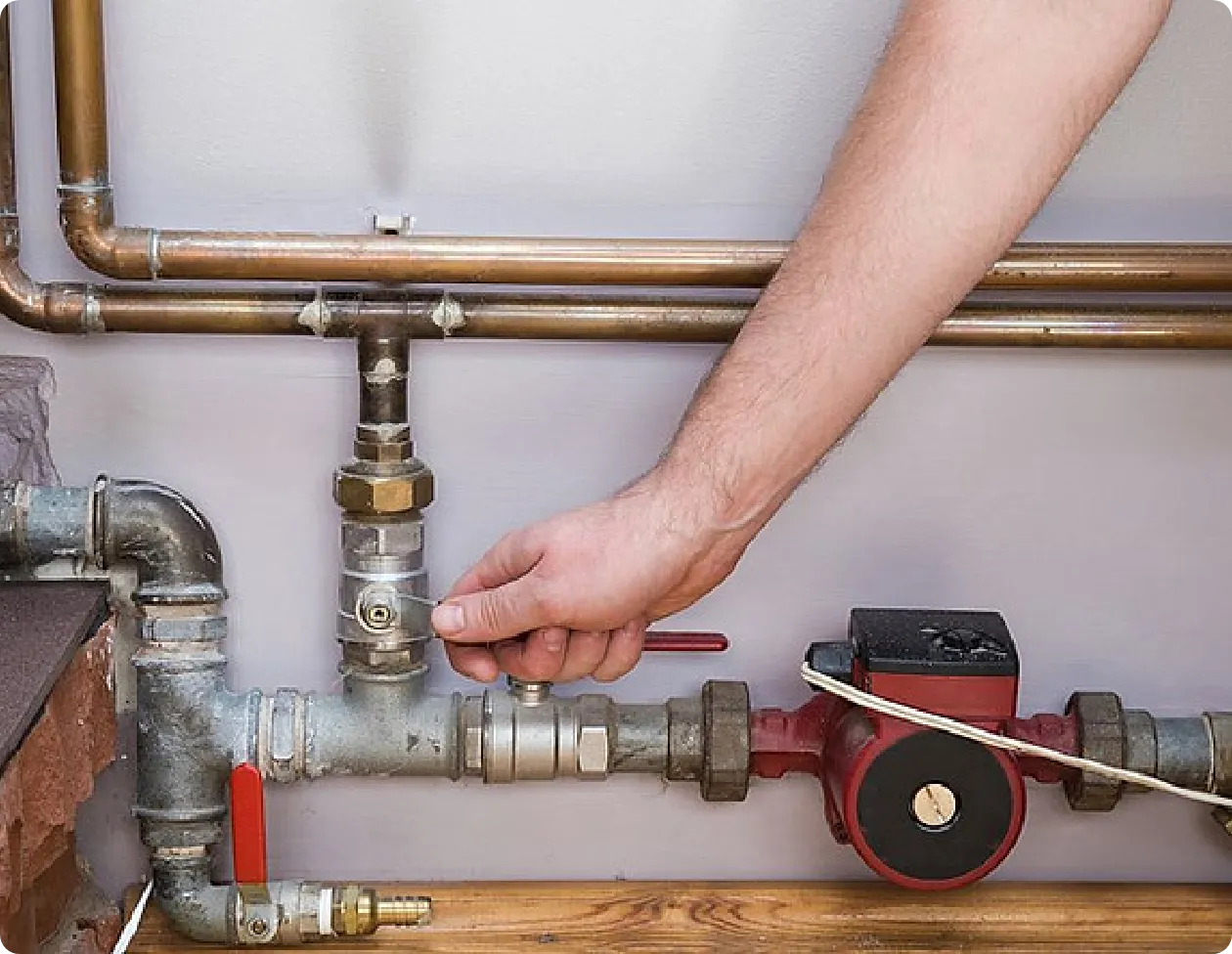
Fault Diagnosis · 6 min read
Central Heating Pump Not Working? Signs, Causes and What to Do
When a central heating pump stops working, the boiler usually fires while the radiators stay cold, then overheats and locks out. A seized, worn or unpowered pump is the usual cause, but low pressure, a stuck valve or sludge can look the same.
Read guideFault Diagnosis · 6 min read
Boiler Condensate Pipe Blocked but Not Frozen? Causes and What to Check
A condensate pipe can block in any weather, not just a freeze. Sludge in the trap, a pipe with too little fall, a blocked gully or a failed condensate pump are the usual causes. You can check the outside end; the trap inside the boiler is engineer work.
Read guide
Fault Codes · 6 min read
Vaillant Boiler Flashing Radiator Symbol: What It Means
On most Vaillant ecoTEC boilers a flashing radiator symbol means the boiler is heating your radiators right now. It is a status light, not a fault. If the radiators stay cold while it flashes, or an F code appears, the problem is elsewhere.
Read guideFault Codes · 6 min read
How to Reset an Ideal Boiler, and When a Reset Will Not Help
Most Ideal boilers reset from the front panel: on a Logic you turn the mode knob to the reset position for a few seconds, on newer display models you press the reset button. Check gas, pressure and the condensate pipe first, reset once, and call an engineer if the code comes back.
Read guide
Fault Diagnosis · 5 min read
No Heating and No Hot Water? What It Means When Both Stop
When the heating and the hot water stop together, the cause is almost always something both depend on: power, gas, pressure, the condensate pipe or the boiler itself. A few safe checks rule out the simple causes before you call an engineer.
Read guideFault Codes · 5 min read
How to Reset a Worcester Boiler, and When Resetting Is the Wrong Move
Most Worcester Bosch boilers reset with a button on the front panel, often marked with a flame symbol or the word reset: press and hold it for a few seconds and let the boiler restart. Check gas, pressure and the condensate pipe first, and stop after one try if the code returns.
Read guideFault Diagnosis · 7 min read
Common Worcester Bosch Boiler Problems and What Causes Them
Most Worcester Bosch boiler problems fall into five groups: failure to light, low pressure, pump and fan faults, hot water failing on its own, and overheating. The code on the display, and when it appears, tells you which one you have.
Read guideFault Codes · 7 min read
Vokera Boiler Problems: Fault Codes, Causes and What to Check
Vokera boilers use different code formats depending on the model: A codes, plain numbers, AL codes on the Mynute and E codes on the Evolve. The most common problems behind them are failure to light, low pressure, overheating and fan or flue faults.
Read guideFault Codes · 6 min read
Potterton Boiler Problems: Fault Codes and What They Mean
Current Potterton boilers share their fault codes with Baxi, so E119 is low pressure and E133 is an ignition failure on both. The most common Potterton problems are low pressure, failure to light, overheating, circulation faults and control board lockouts.
Read guideFault Codes · 6 min read
Baxi Boiler Showing E1? What E1 19, E1 33 and E1 68 Mean
An E1 on a Baxi boiler is rarely the whole story. It is usually the first part of a three-digit code such as E119 (low pressure), E133 (ignition) or E168 (control board). Read the digits that follow before you do anything else.
Read guideFault Diagnosis · 6 min read
Why Is My Boiler Humming or Buzzing?
A steady hum from a boiler is usually the pump, or normal vibration being amplified by a loose panel, bracket or pipe. A harsher buzz that changes when the heating runs points to a pump that is set too high or wearing out, or to air in the system.
Read guideFault Codes · 7 min read
Boiler Ignition Lockout: What It Means and the Code for Your Boiler
An ignition lockout means the boiler tried to light, did not detect a flame and shut itself down for safety. Each manufacturer shows it with its own code, such as EA on Worcester, F28 on Vaillant, L2 on Ideal and E133 on Baxi.
Read guideFault Codes · 6 min read
Vaillant F83 Fault: What It Means and What to Do
F83 on a Vaillant means the burner lit but the flow and return sensors did not see the water warm up. Low pressure, trapped air and a sticking pump are the usual causes. You can check the pressure and reset once; after that it is engineer work.
Read guide
Gas Safety · 6 min read
Smell Gas in the House or Near Your Boiler? What to Do Now
If you smell gas, turn the supply off at the meter, open the windows, avoid anything that could spark and call the National Gas Emergency Service on 0800 111 999. The emergency engineer makes it safe; a Gas Safe registered engineer then finds and fixes the fault.
Read guideFault Diagnosis · 7 min read
Common Vaillant Boiler Problems and What Usually Causes Them
Most Vaillant boiler problems fall into a handful of groups: low pressure, ignition and flame faults, circulation faults, hot water or heating failing on its own, and noise. The fault code, and when it appears, tells you which one you have.
Read guideFault Diagnosis · 6 min read
Is My Boiler Overheating? Signs, Causes and What to Do
A boiler overheats when the burner puts heat into water that is not moving away fast enough. The signs are an overheat lockout code, banging or kettling, very hot pipes and water from the relief pipe. Poor circulation is the usual cause.
Read guideFault Diagnosis · 6 min read
Boiler Fan Fault: Symptoms, Causes and What to Do
A boiler fan fault usually shows up as a boiler that tries to start and then locks out, often with a fan-specific code and sometimes a whirring or grinding noise. The fan itself, its wiring, the circuit board or a blocked flue can all cause it.
Read guideFault Diagnosis · 6 min read
No Power to Boiler? Why the Display Is Blank and What to Check
A boiler with no power and a blank display is most often an electrical supply problem outside the boiler: the switch, the fused spur, a tripped circuit or a power cut. If the supply is fine, the fault is inside, usually a blown internal fuse or the circuit board.
Read guideFault Diagnosis · 6 min read
Why Is My Boiler Whistling or Making a High-Pitched Noise?
A boiler that whistles is usually telling you water is not flowing through it freely. Limescale or sludge in the heat exchanger is the most common cause, followed by low pressure, trapped air and a struggling pump.
Read guideFault Diagnosis · 6 min read
Boiler Thermostat Not Working? Failure Symptoms and How to Check
Heating that will not switch on, will not switch off, or never reaches the set temperature can all be a thermostat fault. The first job is working out whether it is the room thermostat on the wall or a sensor inside the boiler.
Read guideFault Diagnosis · 6 min read
Boiler Leaking Water? What It Means and What to Do Now
A boiler leaking water should be switched off and looked at, not topped up and left. Where the water is coming from tells you most of what you need to know: a dripping pipe outside, a joint underneath or a leak from inside the case.
Read guide
Fault Diagnosis · 6 min read
Boiler Losing Pressure When the Heating Is Off? What It Means
Some drop in pressure as the system cools is normal. A pressure that keeps falling while the heating is off means water is leaving the system, and when the drop happens tells you where to look.
Read guideFault Codes · 5 min read
F2 Boiler Fault: What It Means and What to Do
On an Ideal boiler, F2 means flame loss. The boiler lit, or tried to, and then lost the flame, so it shut down for safety. A few gas-supply checks are safe to make yourself; anything beyond that is work for a Gas Safe registered engineer.
Read guideFault Diagnosis · 5 min read
Glow-worm Boiler Pressure: What It Should Be and Why It Changes
Most Glow-worm combi and system boilers should read around 1 to 1.5 bar with the heating cold. Too low and the boiler shows F22 and stops. Too high and the relief valve starts letting water out. Both are symptoms with a cause worth finding.
Read guideFault Diagnosis · 5 min read
No Hot Water in the Shower but the Taps Are Hot? Here Is Why
If the kitchen and basin taps run hot but the shower does not, the boiler is usually fine. The fault is normally in the shower itself: a worn mixer cartridge, an electric shower unit, or a combi that is not seeing enough flow to fire.
Read guideFault Diagnosis · 6 min read
No Hot Water Anywhere in the House? Combi and Cylinder Checks
When no tap in the house runs hot, the first question is what kind of system you have. A combi and a cylinder system fail in different ways, and a few minutes of safe checks usually shows which part to look at.
Read guide
Boiler Repair · 4 min read
How to Choose a Boiler Repair Engineer in London
The single non-negotiable check is Gas Safe registration. After that, the real difference between engineers is whether they diagnose the fault before quoting, or guess and hope.
Read guideFault Diagnosis · 3 min read
Boiler Keeps Losing Pressure? What It Means and What to Do
If your boiler keeps losing pressure, water is leaving the system somewhere. A rare top-up is normal; needing one every few weeks points to a leak, the pressure relief valve or the expansion vessel, and is worth finding, not repeating.
Read guideFault Diagnosis · 4 min read
Boiler Checks You Can Safely Do Before Calling an Engineer
A few safe checks — pressure, thermostat, fault codes — take minutes and either fix the problem or give the engineer a faster starting point.
Read guideFault Diagnosis · 3 min read
Why Is My Boiler Making a Banging Noise?
A loud banging or knocking noise from your boiler, often called 'kettling', is typically caused by a restriction in water flow, leading to overheating and steam bubbles that collapse violently. The most common culprits are limescale build-up on the heat exchanger or sludge in the system.
Read guideFault Codes · 3 min read
Worcester Bosch vs Vaillant Fault Codes: What Actually Differs
Worcester Bosch and Vaillant fault codes differ primarily in their format and display method, not the core faults they indicate. Both systems point to similar issues like ignition failure or low pressure, but require different diagnostic approaches.
Read guideFault Diagnosis · 3 min read
Frozen Condensate Pipe: What To Do Before You Call an Engineer
A frozen condensate pipe is a common cause of boiler lockouts in cold weather. You can try to safely thaw it with warm water, but if the issue persists or you smell gas, you must contact a Gas Safe engineer immediately.
Read guideBoiler Repair · 3 min read
Combi, System or Regular Boiler: Which Do You Have, and Why It Matters
To tell what boiler you have, look for a hot water cylinder and a cold water tank in the loft: a combi has neither, a system boiler has a cylinder only, and a regular boiler has both. The type directly affects how an engineer diagnoses faults and which parts are needed.
Read guideMaintenance · 3 min read
How Often Should a Boiler Actually Be Serviced?
Your boiler should be serviced once a year by a fully Gas Safe registered engineer. This is crucial for safety, maintaining efficiency, and keeping your manufacturer's warranty valid.
Read guide
Fault Diagnosis · 3 min read
Diverter Valve: What It Does in Central Heating and Why It Fails
A diverter valve switches the hot water your boiler makes between the taps and the radiators. In a combi it is a single valve inside the boiler; system and regular boilers do the same job with external motorised valves. When it sticks, you get heating with no hot water, or hot water with no heating.
Read guideFault Diagnosis · 3 min read
Boiler Keeps Turning On and Off? Short-Cycling Explained
A boiler that keeps turning on and off (short-cycling) is usually overheating, running on low water pressure or reacting to a faulty component such as a thermostat. It needs a proper diagnosis to prevent damage and restore efficient heating.
Read guideBoiler Repair · 3 min read
Is It Worth Repairing an Old Boiler, or Time to Replace It?
Deciding whether to repair an old boiler or replace it involves weighing its age, the cost and frequency of repairs, and its energy efficiency. A new boiler may be a more reliable and cost-effective long-term solution.
Read guide
Radiators · 3 min read
Central Heating Sludge: What It Is, the Signs and How It Is Removed
Sludge in your central heating system causes cold spots on radiators, strange boiler noises, and poor efficiency. A professional power flush cleans the system, restoring heat and preventing damage.
Read guideFault Diagnosis · 3 min read
Boiler Won't Reset? What That Usually Means
A boiler that won't reset is in a safety lockout, meaning the fault is still present. Common causes include low water pressure, a blocked condensate pipe, or a faulty ignition or sensor.
Read guideMaintenance · 3 min read
Smart Thermostats and Boiler Faults: What to Know Before You Blame the Boiler
A boiler that won't respond often has a simple smart thermostat fault. Checking power, connections, and settings can save you an unnecessary engineer call.
Read guideBoiler Repair · 3 min read
How Long Should a Boiler Actually Last?
A well-maintained modern boiler typically lasts 10-15 years. Its actual lifespan depends heavily on model quality, installation, and annual servicing.
Read guideGas Safety · 3 min read
Landlord Gas Safety Certificate (CP12): What Tenants and Landlords Need to Know
A Landlord Gas Safety Certificate (CP12) is a legal requirement for any rented property with gas appliances. It confirms an annual safety check by a Gas Safe registered engineer to protect tenants.
Read guideRadiators · 3 min read
Radiator Balancing Explained: Why Some Rooms Never Warm Up
Some rooms stay cold because your heating system's water flow is unbalanced, favouring the nearest radiators. Balancing adjusts the valves to distribute heat evenly to all radiators.
Read guideFault Diagnosis · 3 min read
Why Does My Boiler Keep Losing Pressure After a Repair?
If your boiler continues to lose pressure after a repair, it's likely due to a new leak introduced during the work, a problem with the pressure relief valve, or trapped air in the system. A Gas Safe engineer should investigate to find the root cause.
Read guideBoiler Repair · 3 min read
Emergency vs Routine Boiler Repair: How to Tell the Difference
An emergency requires immediate action for safety or to prevent major damage, like a gas leak or total heating loss in winter. A routine issue, like a single cold radiator, can be scheduled for repair.
Read guideFault Diagnosis · 3 min read
Boiler PCB Fault: Signs the Circuit Board Has Failed and Why
The PCB is your boiler's main circuit board. Signs it has failed include a blank display, random lockouts and the boiler firing or stopping on its own. Moisture, power surges and age are the usual causes, but a failed fan, sensor or fuse can look exactly the same, so the board should be tested before it is replaced.
Read guideFault Diagnosis · 4 min read
Why Does My Boiler Make Different Noises? Banging, Gurgling, Whistling Explained
Different boiler noises point to specific faults: whistling indicates limescale or pump problems, banging often means kettling from limescale, and gurgling suggests trapped air or condensate issues.
Read guideRadiators · 4 min read
Why Won't My Radiators Heat Up Evenly? Top Cold, Bottom Cold, One Cold Explained
Uneven heating in radiators is usually due to trapped air, internal sludge, stuck valves, or a system-wide issue like low pressure. Identifying the specific pattern of cold spots points to the underlying cause.
Read guideFault Diagnosis · 3 min read
Why Does My Vaillant Boiler Keep Losing Pressure?
If your Vaillant keeps losing pressure, water is leaving the sealed system. The three usual causes are a small leak in the pipework or radiators, an expansion vessel that has lost its air charge, and a pressure relief valve letting water out through the pipe outside. Topping up only buys time.
Read guideFault Diagnosis · 3 min read
Why Does My Worcester Bosch Boiler Keep Turning Off?
Your Worcester Bosch boiler may be switching off due to low water pressure, a blocked condensate pipe, or internal component faults like a failing pump or diverter valve. A Gas Safe registered engineer is needed to diagnose the specific cause safely.
Read guideFault Diagnosis · 3 min read
Why Is My Ideal Boiler Not Giving Hot Water?
When an Ideal boiler's heating works but hot water is absent or lukewarm, the diverter valve is the most common culprit. An engineer will also check the plate heat exchanger, pump, and boiler controls to pinpoint the exact fault.
Read guideFault Diagnosis · 3 min read
Baxi Boiler Not Firing Up? Causes and Troubleshooting Checks
A Baxi boiler that is not firing up usually has one of four problems: a frozen or blocked condensate pipe, low system pressure, no gas reaching it, or a worn ignition electrode. You can check the first three yourself in a few minutes. The ignition parts need a Gas Safe registered engineer.
Read guideFault Diagnosis · 3 min read
Why Does My Glow-worm Boiler Keep Locking Out?
A Glow-worm boiler that keeps locking out is usually failing a critical safety or operation check, most commonly due to ignition issues, poor water circulation, or incorrect system pressure. A Gas Safe registered engineer diagnoses the specific cause.
Read guideFault Diagnosis · 3 min read
What Is a Pressure Relief Valve, and Why Does It Drip?
A pressure relief valve (PRV) is a boiler safety device that releases water if pressure gets too high. A persistent drip often means the valve is worn or fouled and needs replacing by a Gas Safe engineer.
Read guideFault Diagnosis · 4 min read
Boiler Expansion Vessel: What It Does and Signs It Has Failed
An expansion vessel is a small tank on or beside your boiler with an air cushion behind a rubber diaphragm. It soaks up the extra water as the heating warms up, so the pressure does not spike. When it fails, the pressure jumps when the heating runs, falls when it cools, and the relief valve pipe outside drips.
Read guideMaintenance · 3 min read
Thermostat Not Matching Room Temperature? Why, and How to Test It
If your thermostat reads 21 degrees but the room feels colder or warmer, the usual cause is where it is mounted: above a radiator, in sunlight or in a draughty hall. Next come a drifting sensor and, on smart thermostats, a dropped connection. Check against a separate thermometer before replacing anything.
Read guideMaintenance · 3 min read
Central Heating Timer or Programmer Not Working? What to Check
When a central heating timer or programmer stops working, check the clock, the mode (Off, Timed or On) and the batteries first. A power cut or an Advance button pressed by mistake causes more heating no-shows than a broken programmer. If the timer clicks on but the boiler does not fire, the fault is further along.
Read guideFault Diagnosis · 3 min read
Hot Water Going Hot Then Cold? Why a Combi Does It and the Fix
If your hot water runs hot, goes cold for a while, then comes back hot, the usual causes on a combi boiler are limescale in the plate heat exchanger, a sticking diverter valve or a faulty flow sensor. Rule out a tap that is barely open first: that one is not a fault.
Read guideMaintenance · 3 min read
White Smoke From a Boiler Flue: Normal Steam or a Fault?
White smoke from a boiler flue is almost always steam, not smoke. A condensing boiler cools its exhaust so much that the water vapour in it turns into a visible plume, most of all on cold days. Get it checked if the plume smells, leaves black soot, or pours out on a mild day.
Read guideFault Diagnosis · 3 min read
No Hot Water but the Heating Works? Why a Combi Does This
Boiler on, radiators hot, but the hot taps run cold? On a combi boiler the usual cause is a diverter valve stuck in the heating position. A failed flow sensor or a scaled plate heat exchanger can do the same. If you have a hot water cylinder, check the programmer's hot water setting first.
Read guideFault Diagnosis · 3 min read
Why Does My Boiler Lose Pressure More Often in Winter?
Boiler pressure loss is more common in winter because cold weather can reveal small existing leaks, cause condensate pipe blockages that mimic pressure faults, and put more strain on system components due to constant use.
Read guideFault Diagnosis · 5 min read
Why Won't My Boiler Ignite? Pilot Light and Ignition Faults Explained
A boiler that won't ignite is often due to a pilot light that needs relighting, a faulty ignition electrode, a gas supply issue, a faulty gas valve, or a defective flame sensor. Only the pilot light is safe to attempt yourself.
Read guideFault Diagnosis · 7 min read
Hot Water But No Heating? Why Your Radiators Stay Cold
If the taps run hot but the radiators stay cold, the boiler itself is lighting and making heat. The fault sits in whatever tells it to send that heat to the radiators: the thermostat or programmer, a diverter or zone valve, or the pump.
Read guideFault Codes · 5 min read
Worcester Boiler Flashing Blue Light: What It Means
A steady blue light on a Worcester Bosch boiler is normal. A slow flashing blue light, usually with a code on the display, means the boiler has found a fault and locked itself out. The code tells you what the fault is and whether a reset is worth trying.
Read guideFault Diagnosis · 5 min read
Worcester Boiler No Hot Water? Common Causes and Fixes
When a Worcester Bosch combi stops giving hot water, first check whether the heating still works. If it does, the fault is inside the hot water side of the boiler, usually the diverter valve, the flow sensor or a scaled plate heat exchanger.
Read guideFault Diagnosis · 6 min read
Boiler Pressure Too High? Causes and How to Lower It
Boiler pressure above about 2.5 bar when the system is cold is too high. You can bring it down by bleeding a radiator, but if it keeps creeping back up, the filling loop or the expansion vessel is usually to blame.
Read guideFault Codes · 5 min read
F1 Boiler Fault: What It Means on Your Boiler
There is no single meaning for an F1 boiler fault. On an Ideal boiler it means low water pressure, which you can usually fix yourself. On a Glow-worm it means the boiler tried to light and did not detect a flame, which usually needs an engineer.
Read guide